Neal Ascherson

Neal Ascherson was for many years a foreign correspondent for the Observer, based in Bonn, and has written several books on Central and Eastern Europe, including Black Sea and The Struggles for Poland. He is also the author of Stone Voices: The Search for Scotland and a novel, The Death of the Fronsac. He has written more than a hundred pieces for the LRB, starting early in 1980 with an account of being in a taxi queue with the spy Anthony Blunt, ‘fervently cheerful’ now his secret had been revealed.

Big Man Walking: Gorbachev’s Dispensation

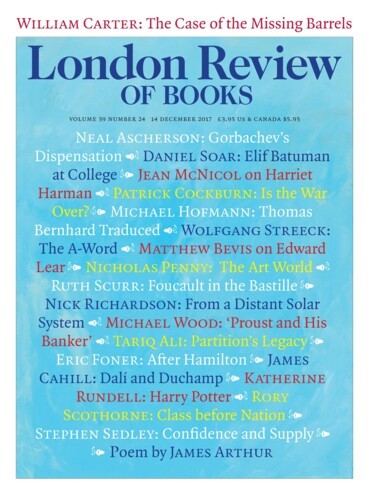
Neal Ascherson, 14 December 2017

Not many people change the world. Fewer still are thanked for it. Adolf Hitler changed the world on 22 June 1941: by invading the Soviet Union, he delivered ‘Hitler’s Europe’, the divided continent we lived in until 1989. We were not grateful for that. Mikhail Sergeyevich Gorbachev changed the world, as so many adoring millions saw it at the time, by ending the threat of their extermination by nuclear war and by allowing Europe’s ‘captive nations’ to liberate themselves. But then, a Samson already blinded by his enemies, he brought down the gigantic temple of the Soviet Union on his own head, and his own power perished with it.
Diary: In Gdansk

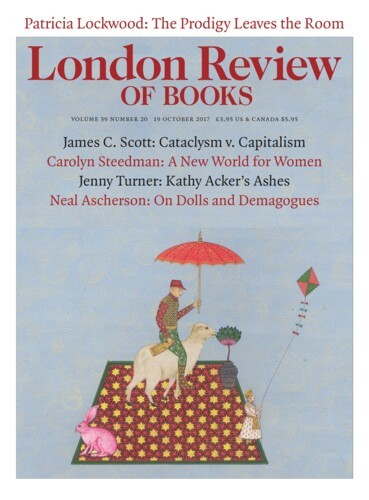
Neal Ascherson, 19 October 2017

In Gdansk​, the walk to the museum takes me past the Patriotic Clothing Store. Two blonde, blue-eyed dolls stand in the window, wearing little T-shirts saying: ‘My parents are 100% Polish.’ They have their wee fists raised in what a visiting journalist from Warsaw suggested, a bit unfairly, was a fascist ‘Heil’. Inside, the shop is small and dour. Racks of grown-up...

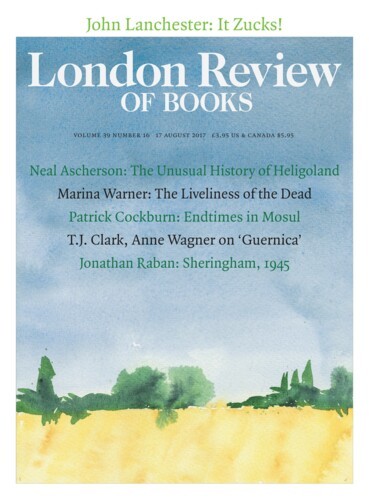
Konrad Adenauer said that ‘peaceful Heligoland, set in the seas between Germany and Britain, will be in future a symbol of the will to peace and friendship of both nations.’ Few Britons now know where the place is. Still fewer know that it was once a British colony, a tiny offshore reminder that Britain is as much a European nation as it was ever a global power.

Into the Net: Records of the Spanish Civil War

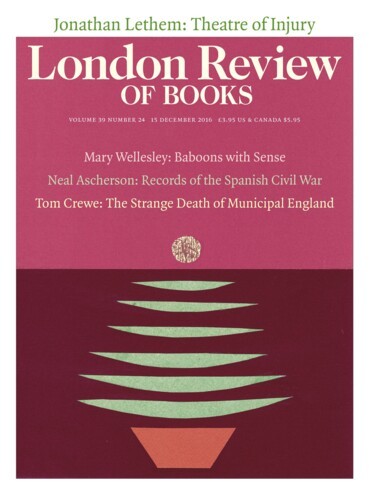
Neal Ascherson, 15 December 2016

Eighty years​ have gone by. But there’s still no agreement on how the Spanish Civil War should be remembered. Nor should there be. The real tribute to the force of that human firestorm is the contest of judgments and feelings which still smoulders and still causes pain.

Where should the focus be? For many, simply on the stories: the recounting of sacrificial courage and suffering. For...

England prepares to leave the world

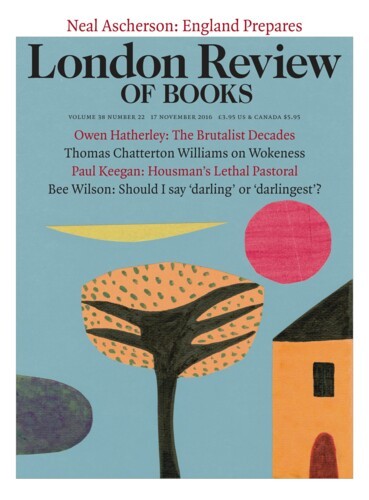
Neal Ascherson, 17 November 2016

I never thought I would see this opera again. ‘Rule Britannia!’ peals, the curtain parts, and there is a mad queen poling her island raft away into the Atlantic. Her shrieks grow slowly fainter, as the mainland falls behind. The first performance was in the 1980s. Who could forget Margaret Thatcher’s ear-splitting arias? But she never took the raft to the horizon, and never finally cast off the cross-Channel hawser mooring her to Europe. This revival is different. Theresa May says she’s bound for the ocean, and she means it. Or rather, she means it because she doesn’t mean it. Nothing in British history resembles this spectacle of men and women ramming through policies everyone knows they don’t believe in.

‘The subtlest​ of insults to Scotland is, it seems, to return to it,’ Neal Ascherson wrote in the Scottish political review Q in 1975. The historian Christopher Harvie described the...

Read more reviews

Coleridge’s​ favourite novelist, John Galt, had a gift for encapsulating disgrace under pressure, and his novels of small-town Scottish life are among the early masterpieces of British...

Read more reviews

Beast of a Nation: Scotland’s Self-Pity

Andrew O’Hagan, 31 October 2002

In Westminster Abbey a couple of years ago, I stood for over an hour talking to Neal Ascherson. It was one of those freezing January evenings – cold stone, long shadows – and we...

Read more reviews

Littoral

Misha Glenny, 9 May 1996

In the late Twenties, the paternal grandfather of Dimitri, a close friend of mine from Thessaloniki, decided to leave Novorossisk, the Russian Black Sea port. The Soviet Government had ended the...

Read more reviews

Intelligencer

Sylvia Lawson, 24 November 1988

The book’s title mocks the author’s own position. It comes from a newspaper column of 1985 in which he attacked what he saw as ‘the retreat from politics’ into nihilistic...

Read more reviews

The Rat Line

Christopher Driver, 6 December 1984

By chance, the evening I took this book to bed for the painful reading expected, I jabbed the tooth of a comb down a fingernail and cried out. As a reminder of what Klaus Barbie was about, not...

Read more reviews

Liking Walesa

Tim Sebastian, 15 July 1982

For nearly eighteen months Lech Walesa walked on quicksand, buoyant and for all the world supremely confident. In the summer of 1981 I asked him whether he was worried about the Soviet tanks...

Read more reviews

Poland’s Special Way

Keith Middlemas, 4 February 1982

In the six months since Neal Ascherson’s intricate but lucid account of the rise of Solidarity was finished, Poland’s affairs have become the latest world-heroic saga. While the...

Read more reviews

Read anywhere with the London Review of Books app, available now from the App Store for Apple devices, Google Play for Android devices and Amazon for your Kindle Fire.

Sign up to our newsletter

For highlights from the latest issue, our archive and the blog, as well as news, events and exclusive promotions.

Newsletter Preferences