Paul Taylor

Paul Taylor is professor of health informatics at UCL.

From The Blog
21 January 2014

According to the front page of yesterday’s Guardian, the NHS is to start selling our confidential medical records. Every doctor has a duty to keep patient-identifiable data secure, and only share it as far as is in the patient’s immediate best interests. At the same time, in order to run healthcare organisations or to carry out medical research, it is necessary to compile statistics about diseases and treatments. It therefore makes sense for some information collected in the course of caring for patients to be made more widely available – shared with managers, bureaucrats and researchers – but only if it is anonymised.

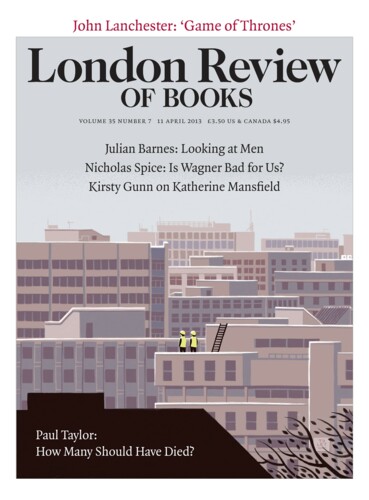
Rigging the Death Rate

Paul Taylor, 11 April 2013

The publication in February of the Francis Report into the failings of the Mid-Staffordshire NHS Foundation Trust was the worst of the many recent bad news stories about the NHS, its significance underscored by the fact that David Cameron felt it necessary to present the report to the House of the Commons himself, rather than leave it to the secretary of state for health. The public inquiry was set up in 2010 by the then secretary of state, Andrew Lansley, to investigate further the findings of a previous inquiry, commissioned by the Labour health minister.

From The Blog
17 October 2012

When Alan Sokal tricked Social Text into publishing a nonsensical parody of postmodernist criticism, he thought the journal’s failure to spot that the article was a hoax revealed a shocking lack of intellectual rigour. John Sturrock, writing about it in the LRB, noted that Social Text exists in a different realm of discourse from Nature and that Sokal’s contribution, for all its faults, was a ‘jauntily expressed’ piece of ‘extreme provocation’, and as Sokal knew, the kind of thing that Social Text existed to promote. Well yes, but, as legions of letter writers responded, don’t things you publish sort of have to make sense? Last month That’s Mathematics! reported another landmark event in the history of academic publishing.

From The Blog
5 May 2011

Perhaps David Cameron was worried about the dissonance between his pre-election pledge to put an end to top-down reorganisations of the NHS and the post-election labelling of his government’s proposed changes as the biggest reorganisation that the service has ever seen. Perhaps Nick Clegg was unhappy that two months after the key Lib Dem health policy – elected representatives on Primary Care Trusts – was written into the coalition agreement, he was being asked to support the abolition of the PCTs. Who knows, but they must have been pretty unhappy with the politics of NHS reform to have ordered a pause in the progress of the bill to allow for a ‘listening exercise’.

From The Blog
16 December 2009

The four most ‘informative’ words in Moby-Dick, statistically speaking, are ‘I’, ‘whale’, ‘you’ and ‘Ahab’. Marcello Montemurro and Damian Zanette worked this out by comparing the text of Moby-Dick to all the possible alternatives obtainable by shuffling Melville’s words into random sequences. These are not the four words that are used most often, or that carry the most ‘information’ in the everyday sense of the term, but the words whose positioning in the original, meaningful text differs most from the way they would be scattered in all other permutations. The ‘information’ here is of the mathematical, measurable kind: ‘most informative’ means ‘least randomly distributed’. It may seem a slightly odd way to try to quantify semantic content, as though when Melville wrote Moby-Dick, it wasn’t so much a matter of finding the right words, as of putting them down in the right order.

Read anywhere with the London Review of Books app, available now from the App Store for Apple devices, Google Play for Android devices and Amazon for your Kindle Fire.

Sign up to our newsletter

For highlights from the latest issue, our archive and the blog, as well as news, events and exclusive promotions.

Newsletter Preferences