Peter Campbell

Peter Campbell, who was born in Wellington in New Zealand in 1937 and died in London in 2011, designed the LRB and wrote more than three hundred pieces for the paper, including, from 2000, a regular gallery piece. He also did the cover illustrations from 1993 until his death: his last, a fox in the street outside his house, was painted only a few weeks earlier. Many of these covers, as well as some of his other illustrations and book designs, can be seen in the collection Artwork and at petercampbell.org.uk.

Mary-Kay Wilmers, who first worked with him on the Listener in the late 1960s, when he designed the books for such BBC series as Kenneth Clark’s Civilisation and Jacob Bronowski’s The Ascent of Man, wrote about his capacious interests. When there wasn’t an exhibition he liked, he described what he saw around him: gasometers, plane trees, beaches (and untucked shirts), funfairs, the squares of Bloomsbury (where the LRB offices are), the timber-framed houses of Wellington. He was also interested in how things work, writing memorably about escalators. There were, as Wilmers wrote, ‘few aspects of the world that Peter didn’t wish to honour’.

Homage to André Friedmann

Peter Campbell, 7 November 1985

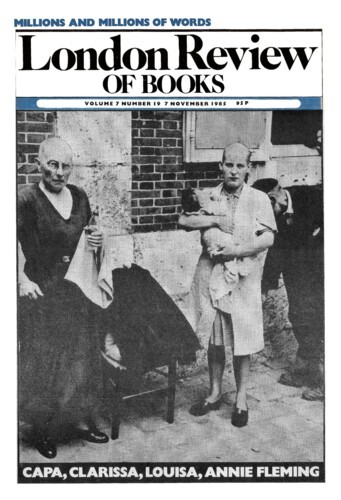
In November 1938 Picture Post devoted 11 pages to pictures of a Loyalist attack on Insurgent troops outside Barcelona. They described one, showing men sheltering from falling shells, as ‘the most amazing war picture ever taken’. The caption to the full-page portrait of the photographer read ‘The Greatest War-Photographer in the World: Robert Capa’. Life also ran the story and described how Capa had crossed the river Segre with the troops the night before the action.
Humph

Peter Campbell, 4 July 1985

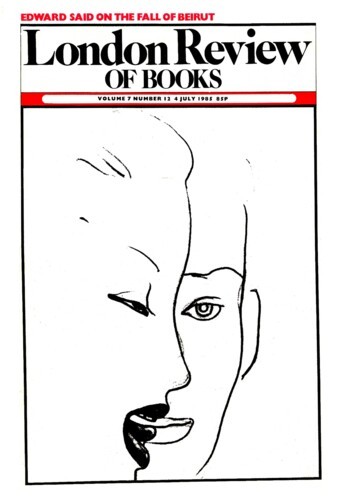
It is only fair to preface anything you write about Degas with a few of his own remarks. He challenges you to prove relevance and competence. He wanted to be ‘illustrious and unknown’, and wrong-foots biographers by making their curiosity seem prurient or irrelevant. He thought most writing about art ignorant and unnecessary: ‘I have spoken to the most intelligent people about art,’ he said to George Moore, ‘and they have not understood … but among people who understand words are not necessary: you say humph, he, ha, and everything has been said.’ Critics not only rush in where there is nothing to be said, what they do say is glib: ‘Painting is not difficult when you do not know anything about it. But when you know, oh, it’s something quite different.’ Biographers have no easy task. There is plenty of material: notebooks, letters – which have some of the combative quality of his table talk. But he was a difficult man, in whose life protective colouring and character are hard to distinguish. In a notebook he kept in his twenties he wrote: ‘The heart is an instrument which rusts if it is not used. Without a heart can one be an artist?’’

Illustrating America

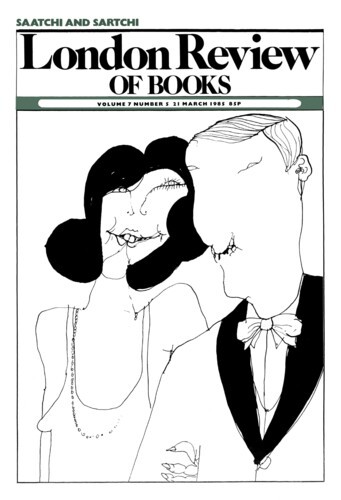
Peter Campbell, 21 March 1985

The landmarks of New York – the Empire State and Chrysler Buildings, the Rockefeller and World Trade Centres – have no ceremonial public function. Victories are consecrated in the streets, with ticker-tape falling. And New York painting is like New York celebrations: it has not been made for palaces and chapels. Reginald Marsh’s Coney Island bathers were its Three Graces, George Bellows’s boxers its Laocoon. But then in the late Forties Abstract Expressionism came, producing something with the scale and power of public art, although these paintings, like the Chrysler Building and the Rockefeller Centre, were self-referential. They did not glorify the city, or victories, or political alliances, or history, or the land, but the artist himself and his creativity: art galleries apart, was there a natural home for them?’

Crotchet Castles

Peter Campbell, 6 December 1984

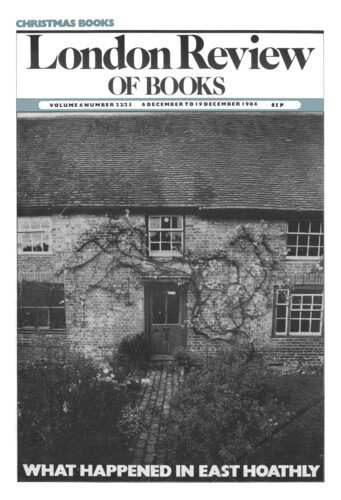
The almost universal extra-professional unpopularity of architects (what other Royal Institution could the Prince of Wales put the boot into with such sure expectation of applause?) is no new phenomenon. Distrust of the man who knows what you want better than you know it yourself goes back at least as far as the 17th century. Roger North, an amateur architect whose only substantial extant work is the gateway to the Middle Temple, wrote a treatise on building in the mid-169Os. It trenchantly affirms amateur virtues: ‘where a man builds for his owne use, none can contrive well but himself. I exclude not councell … but the owner must pronounce.’ He complains of the inability of ‘surveyors’ to keep control over work in progress and observes that they will ‘practice their owne whims, at your cost. They having viewed many fabricks, in life, and in draught, with the ornaments of the antique and moderne invention, have a world of crotchetts of their owne … all which they have an itch to put in execution, and it is miraculous if they doe it not the first opportunity of building they are employed in. And lett a man arme himself what he can, they will argue and perswade him beyond his intentions.’ North conceded that great undertakings were not to be left to amateurs, but his belief that a gentleman with a little enthusiasm and education could build as well as a professional makes architecture seem complicated, but not mysterious.

Star Turn

Peter Campbell, 2 August 1984

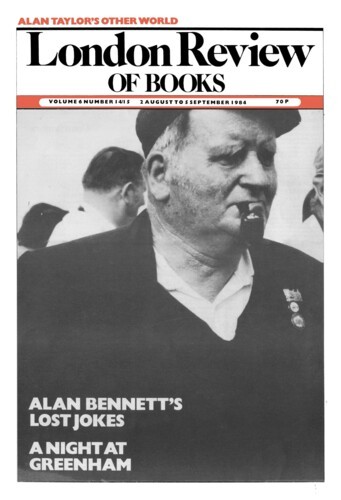
This is a complicated novel but a simple story. Kate is having an affair, has been for years, with Jake. It seems to be over:

Read anywhere with the London Review of Books app, available now from the App Store for Apple devices, Google Play for Android devices and Amazon for your Kindle Fire.

Sign up to our newsletter

For highlights from the latest issue, our archive and the blog, as well as news, events and exclusive promotions.

Newsletter Preferences