Peter Campbell

Peter Campbell, who was born in Wellington in New Zealand in 1937 and died in London in 2011, designed the LRB and wrote more than three hundred pieces for the paper, including, from 2000, a regular gallery piece. He also did the cover illustrations from 1993 until his death: his last, a fox in the street outside his house, was painted only a few weeks earlier. Many of these covers, as well as some of his other illustrations and book designs, can be seen in the collection Artwork and at petercampbell.org.uk.

Mary-Kay Wilmers, who first worked with him on the Listener in the late 1960s, when he designed the books for such BBC series as Kenneth Clark’s Civilisation and Jacob Bronowski’s The Ascent of Man, wrote about his capacious interests. When there wasn’t an exhibition he liked, he described what he saw around him: gasometers, plane trees, beaches (and untucked shirts), funfairs, the squares of Bloomsbury (where the LRB offices are), the timber-framed houses of Wellington. He was also interested in how things work, writing memorably about escalators. There were, as Wilmers wrote, ‘few aspects of the world that Peter didn’t wish to honour’.

Back to back

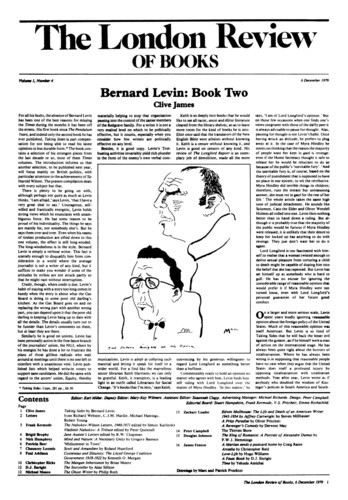
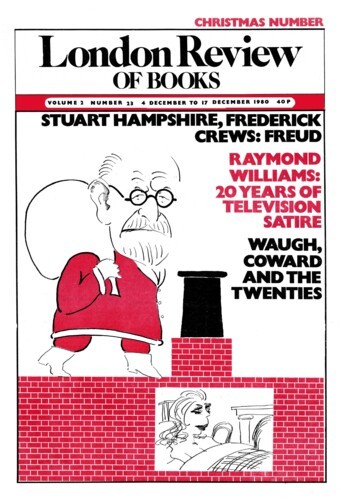
Peter Campbell, 4 December 1980

Chapter Four of Mary Lutyens’s memoir of her father finds her parents at Scheveningen, on their honeymoon. ‘For the first week they sat back to back on the beach in two of those old-fashioned high-backed basket chairs, she facing towards the sea and he towards the land, reaching back uncomfortably to hold hands. For the second week he took her sight-seeing when she was so sore from his love-making that she could hardly walk and felt that she should have been resting.’ They had already found two incompatibilities: Emily was to go on finding Edwin’s sexual demands repugnant, and Edwin was never to share Emily’s enthusiasm for the seaside (like half an apple, he said).
Taking pictures

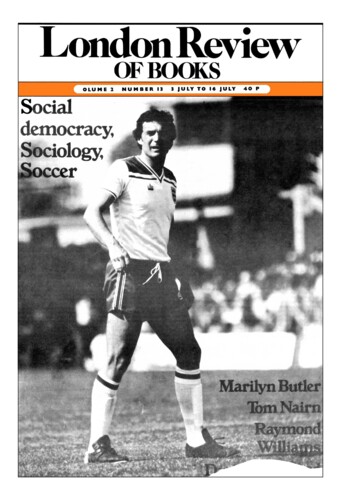
Peter Campbell, 3 July 1980

When the young Steichen photographed Rodin’s ‘Balzac’ by moonlight in 1908, the sculptor gave him 2,000 francs. Steichen was being treated as an equal: Rodin’s skilled studio assistants were at this time being paid 60 francs a week. Not all photographers who worked with Rodin were treated so well, but because he wanted his work to be known through prints which he had approved, and because he used photography as a way of looking freshly at that work, the collection of photographs in the archives of the Musée Rodin is of absorbing interest. In this selection by Albert Elsen they are published for the first time; they reveal much about Rodin’s methods of work, and many of them are magisterial interpretations of his sculpture. But the book is also a contribution to the history of photography, and it is the light it throws on the relationship between works of art and photographs that concerns me here.

Pretty Things

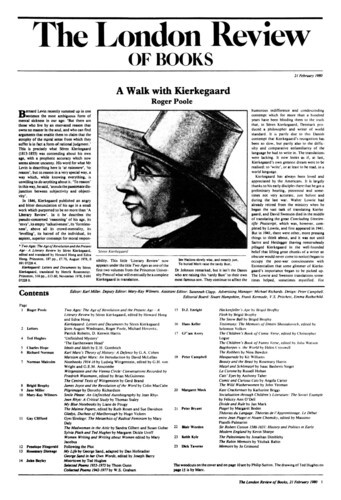
Peter Campbell, 21 February 1980

The literature of pre-literacy reaches its audience by way of adults – parents, teachers, librarians and so on. The best reason for learning to read is to escape from what they prescribe or tolerate. Being neither buyers nor readers, the ultimate audience for picture books is doubly disadvantaged when it comes to influencing what is provided for them. Yet it has on the whole been well served by the teachers and librarians who, in Britain and the USA at least, are still major buyers of hard-cover picture books. The mass markets of cheap annuals and paperbacks are another matter – although the huge increase in the number of titles in soft covers, many of which have already had a long life as library books, heartens anyone who cares about the health of the picture-book form.

The Hayward Gallery has been inwardly transformed – at a reported cost of over £100,000 – to receive the Thirties exhibition, an enterprise on the largest scale, put together by a committee chaired by William Feaver. Modernist white walls mask the emphatic textures and shapes of the interior of the shell, so that Fifties Brutalism encloses Thirties Modern.

But what is...

Read anywhere with the London Review of Books app, available now from the App Store for Apple devices, Google Play for Android devices and Amazon for your Kindle Fire.

Sign up to our newsletter

For highlights from the latest issue, our archive and the blog, as well as news, events and exclusive promotions.

Newsletter Preferences