Stephen Sedley

Stephen Sedley is a former judge of the High Court and the Court of Appeal, and visiting professor at Oxford.

When the judges assembled to compose a Loyal Address to Queen Victoria on the opening of the Law Courts, the draft before them began: ‘We your judges, conscious as we are of our manifold defects …’ The Master of the Rolls exploded: ‘I am not conscious of having manifold defects.’ Lord Justice Bowen, who was a scholar with a sense of humour, suggested, to mollify him, that the Address might begin: ‘We your judges, conscious as we are of each other’s manifold defects …’ I have to admit, in relation to the subtitle of Professor Zander’s book, that I was not conscious that the legal system was in ferment. But a lot depends on your point of observation. From inside a deeply conservative and complacent profession almost anything can look like the end of the world, starting with the change from foolscap to A4 stationery. I recall the leader of the Bar a decade ago alerting us by circular letter to the appointment of a Royal Commission on Legal Services, and describing criticisms of the Bar which had not yet been advanced to it us ‘ill-informed’. In our divided profession we find change upsetting and criticism unwelcome, unless they happen to affect the other side of the profession.
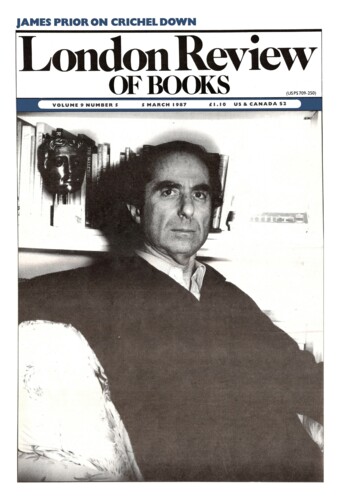
Diary: At the Courtroom

Stephen Sedley, 5 March 1987

The courtroom process keeps its perennial hold on lovers of drama at all levels. At tabloid level it provides revelations of human depravity which nurture every generation’s belief that standards are sinking to previously unknown depths. At the level of high art it is a crucible in which to purge the dross of events and distil essences of truth. Novelists find courtroom proceedings a valuable device for bringing a story to a head and a conclusion: but in real life a judgment or verdict is far more often a stage in a painful odyssey, or even the start of one, than its resolution.

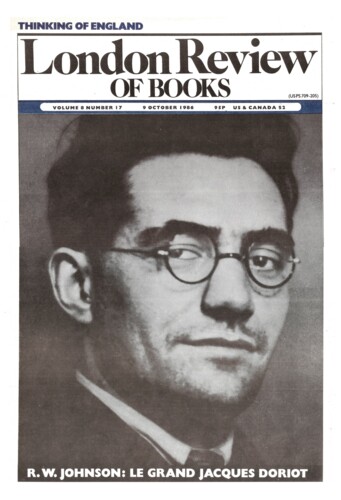
Who didn’t kill Carl Bridgewater?

Stephen Sedley, 9 October 1986

The legal process, at least in English law, is a quite inadequate instrument for arriving at the truth about a crime. This is not necessarily an adverse comment. There is justification for requiring that if the state accuses a citizen of a crime it must prove it in an adversarial process to the full satisfaction of at least ten jurors. And this is why criminal trials are not designed to arrive at anything so baffling or protean as the truth: their sole purpose, it has been said, is to answer the question ‘Howzat?’ Paul Foot’s question, who killed Carl Bridgewater? was not the question before the jury which in 1979 at Stafford convicted three men and a boy of shooting in cold blood a 13-year-old lad who had evidently stumbled on a burglary at Yew Tree Farm in Staffordshire in the course of his newspaper round. The question for them was simply whether the evidence before them satisfied them that the four men in the dock were guilty of the killing. Put like that, the distinction appears to be without a difference, and so it is in a great many cases. Foot’s energetic, passionate and meticulous inquiry into the Bridgewater murder, however, has once again exposed the cleft which can occur between the two. He has not been able definitely to answer his own question: but he has been able to show beyond a peradventure that if a jury had known what is now known about the case, it would not have inculpated the three men serving life sentences and the fourth who has died in gaol.

At Sunday mass in my North London parish there was recently imposed a ‘New People’s Mass’. It came suddenly and without warning. One week, we were all enjoying versions of the...

Read more reviews

In a narrow pass

Derek Hirst, 19 November 1992

Stephen Sedley and Lawrence Kaplan seek to map a new course for the post-socialist Left, and to turn attention away from that beguiling but now exploded theme, egalitarianism. The long fixation...

Read more reviews

Read anywhere with the London Review of Books app, available now from the App Store for Apple devices, Google Play for Android devices and Amazon for your Kindle Fire.

Sign up to our newsletters

For highlights from the latest issue, our archive and the blog, as well as news, events and exclusive promotions.

Newsletter Preferences
