James Wood

James Wood is professor of the practice of literary criticism at Harvard and a staff writer at the New Yorker. His books include The Broken EstateThe Irresponsible SelfHow Fiction Works and, most recently, Serious Noticing: Selected Essays 1999-2019.

A Snack before I Die

James Wood, 21 August 1997

We can get a better understanding of Chekhov and his work from the notebook he kept than from any biography – even an important biography, like this one. It is a ledger of enigmas in which nothing adds up, full of strange squints, comic observations and promptings for new stories.
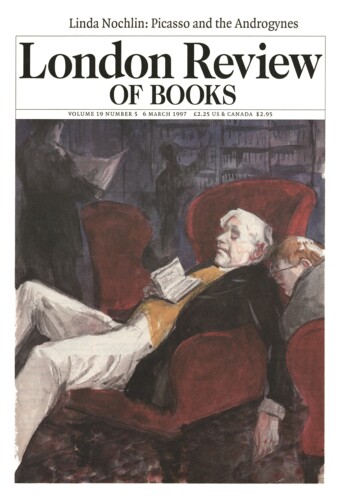
Things happen all the time

James Wood, 8 May 1997

There are writers for whom reality seems a secret novelty; and there are writers for whom it seems a shared habit. In the first category-which would include Dostoevsky, Conrad, Svevo – nothing is entirely recognisable, everything seems to have been burned out of recognition by the difficulty of its entry into the world. This is the strangeness they offer, and which we enjoy. In the second category, reality is born in an open ward. It makes its appeal to a known world. It is not that the writer’s reality is necessarily familiar to the reader, but it is familiar to its characters. We learn to judge oddity by seeing it through them. In this category are Tolstoy, Chekhov; and in our age the late V.S. Pritchett and Alice Munro.’

Seeing in the Darkness

James Wood, 6 March 1997

Taking the clapper out of the bell makes no sense, but this is what we do too often with D.H. Lawrence. The writer who seemed to believe in dualisms – blindness over sight, blood over mind, pagan over modern, and so on – gets broken into two like a stable door. Readers, critics and biographers insist on splitting Lawrence into writer or preacher, dogmatist or poet. On the one hand, there is the marvellous animist, the quick, vital writer of physical descriptions – the poet, say, who sees a kangaroo with its ‘drooping Victorian shoulders’, or a mosquito moving like ‘a dull clot of air’. On the other, there is the preacher, the tiresome Lawrence of hoarse doctrine, the bully of blood, the friendless hammer coming down again and again in the prose.’

Child of Evangelism

James Wood, 3 October 1996

My childhood was spent in the command economy of evangelical Christianity. Life was centrally planned: all negotiations had to pass by Jesus’s desk. Language was religiously inflated. When my bedroom was untidy my parents told me that this was ‘poor stewardship’, because it was not right to be careless with God’s things. Poor behaviour was ‘unworthy’ or ‘unedifying’. Sometimes it seems that my childhood was the noise around the hush of God. And at times an actual hush: I remember several episodes when my parents talked quietly about someone they knew who had ‘lost his faith’, and the solemn vibrations that would fill the house at these times, as if a doctor were visiting. Similarly, my childhood was marked by the deaths of friends of my parents who were members of their congregation, people for whom the full evangelical panoply – prayer, the laying on of hands, anointing with oil – did not seem to have worked.’

Scruples

James Wood, 20 June 1996

Seamus Heaney has always doubted poetry – not as a philosopher might doubt reality, but as a rich man might doubt money. He feels not scepticism, but guilt. He thanks poetry for existing but is tormented by the size of its donation. Poetry, he suspects, has no right to its wealth; so he lavishes scruples on his readers. Heaney’s poetry is loaded with anxiety and self-tormented power. At times this is truly powerful, and at other times merely self-tormented. But this is nevertheless the grimace of a major poet.’

Read anywhere with the London Review of Books app, available now from the App Store for Apple devices, Google Play for Android devices and Amazon for your Kindle Fire.

Sign up to our newsletter

For highlights from the latest issue, our archive and the blog, as well as news, events and exclusive promotions.

Newsletter Preferences