Collection

What was reading?

Links to the 54 pieces that feature in the LRB Diary for 2027, which investigates the origins of reading, its practices, perversions, pioneers, technologies and effects, and the writers and writing that inspired them, from Enheduanna, the earliest named author, all the way through to ChatGPT.

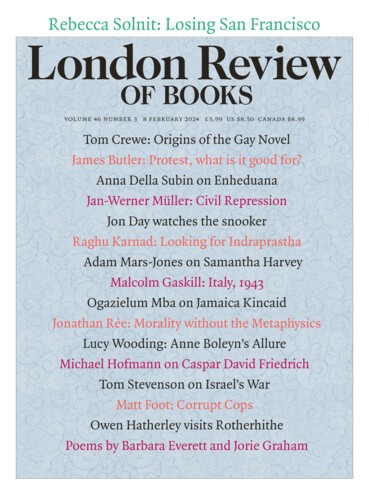
Wreckage of Ellipses: On Enheduana

Anna Della Subin, 8 February 2024

The Sumerian priestess Enheduana managed the complex affairs of the temple and wrote poems, among them a collection of temple hymns that sought to accomplish in verse what her father, Sargon of Akkad, did with axes and spears: to unify the resistant cities of the new empire into a coherent whole.
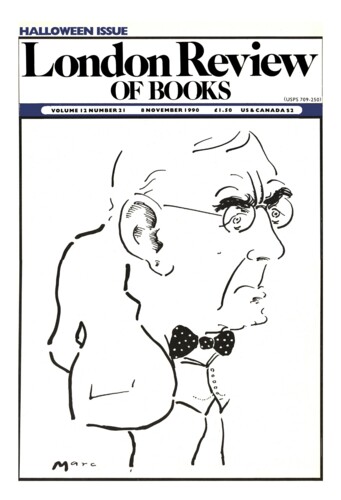

Assurbanipal’s Classic

Stephanie West, 8 November 1990

Cuneiform studies have come far since 1872, when George Smith, assistant keeper in the Oriental Department of the British Museum, engrossed the December meeting of the Society of Biblical...

Like a Meteorite

James Davidson, 31 July 1997

Two thousand seven hundred and thirty years ago, somewhere on the west coast of Turkey, not far perhaps from Izmir, you are attending a feast. Although some of your neighbours are still noisily...

Sunday Best: Wilfred Owen’s Letters

Mark Ford, 26 September 2024

It becomes apparent from Owen’s graphic and appalled letters home that it was the urge to make his mother, in the first instance, see and feel what the Western Front was really like that drove him to mobilise all his literary resources to express what to many seemed inexpressible.

Burning isn’t the only way to lose a book

Matthew Battles, 13 April 2000

The story of the burning of the Greatest Library of the Ancient World by the Arabs is well known: John the Grammarian, a Coptic priest living in Alexandria at the time of the Arab conquest in 641...

Joinedupwritingwithavengeance

Danny Karlin, 7 January 1993

The history of punctuation is bound up with the most important shift in the theory of writing to have taken place in our culture. The written word began as a record of speech, a priority of voice...

Pompeian Group Therapy

Nora Goldschmidt, 22 September 2022

For the Roman senatorial elite, networks of knowledge production were also social networks. They read each other’s work, lent each other books and discussed philological and philosophical matters. Caesar dedicated De Analogia to Cicero; Varro dedicated a book on Roman antiquities to Caesar; Brutus dedicated De Virtute to Cicero; and Cicero dedicated work to friends including Brutus and Varro.

Darkness and a slippery place

Robert Alter, 25 April 1991

Augustine’s Confessions, though frequently set at the beginning of a line of literary history that leads to Rousseau and Henry Adams, is a narrative of the writer’s life only in a...

Kings and Kinglets: Cassiodorus

Michael Kulikowski, 12 August 2021

Ancient​ Latin literature has reached us along an improbably narrow path. Two millennia of rats, fire and floods were as nothing compared with three historical bottlenecks. Only one of these...

Access to the Shining Prince

Hide Ishiguro, 21 May 1981

Some twenty years ago, not long after I came to England, I heard a talk by Rayner Heppenstall asserting that English and French were the only two cultures which had a continuous literary...

Travelling Text

Marina Warner, 18 December 2008

Somewhere between the supernatural, which presumed a belief in God, and the uncanny, which saw inexplicable, dreadful or wonderful things as the dream products of the mind and, often, of personal disturbance, the spirits of The Arabian Nights opened a space in which heterodox fantasy could be indulged without danger – believed in without having to believe it true, to adapt a phrase of Wallace Stevens.

How to Read Aloud

Irina Dumitrescu, 10 September 2020

It is easy to overlook how loud pre­-modern education was. Most of our evidence for more than a thousand years of teaching consists of books, and, to the modern way of thinking, books are objects used silently. That this was not the usual way of doing things for much of Western history is now better known, though still difficult fully to understand.

Read anywhere with the London Review of Books app, available now from the App Store for Apple devices, Google Play for Android devices and Amazon for your Kindle Fire.

Sign up to our newsletters

For highlights from the latest issue, our archive and the blog, as well as news, events and exclusive promotions.

Newsletter Preferences