There are all kinds of things to do with books apart from reading them, and one of the most pleasurable is to dream of reading them. Many of us keep scribbled or notional lists of such dreams,...
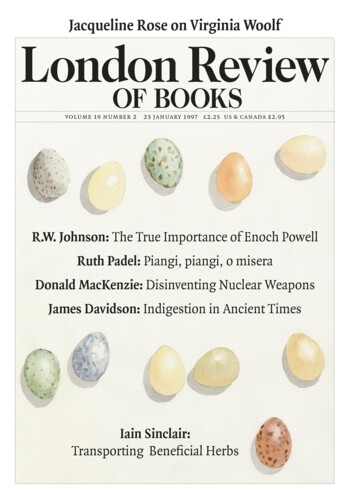
Smashing the Teapots: Where’s Woolf?

Jacqueline Rose, 23 January 1997

Virginia Woolf once said that biographies fail because the subject of the biography always goes missing (lost under the welter of the life). In this case, it is madness that goes missing because Woolf is never allowed to go missing from herself.

Short Cuts: Don't Bother to Read

John Sturrock, 22 March 2007

A few years ago, a brilliant small book on detective fiction appeared in France called Qui a tué Roger Ackroyd? It got talked about at the time for demonstrating, rather neatly it was...

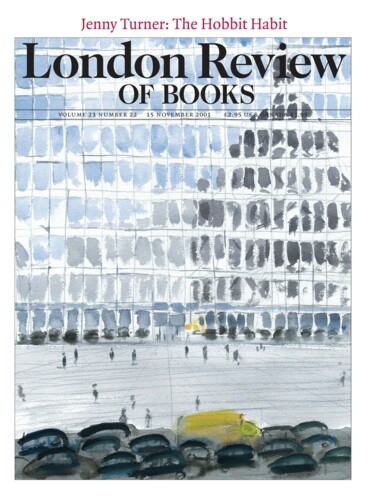
I am not interested in slumming, in showing off about my naughty hobbit habit. The idea of slumming is an attempt to negotiate a deal between the secret shameful self who just wants to gobble, gobble, gobble and an acceptable adult dinner-party persona. All of us were children once, and that should be enough.

Summer with Empson: Learning to Read

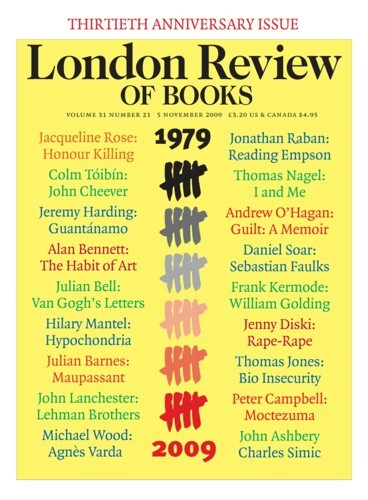
Jonathan Raban, 5 November 2009

My mother taught me to read in the summer of 1945, between VE Day and VJ Day, when I was turning three. Time lay on her hands: my father, a major in the Territorials, was away in Palestine,...

Osip and Nadezhda Mandelstam

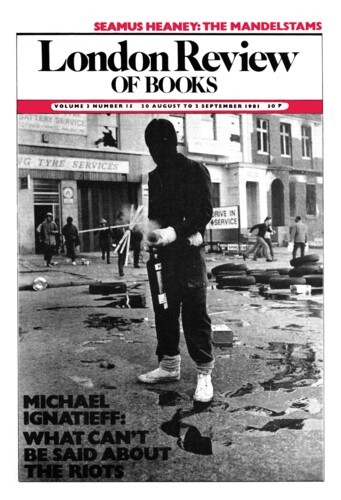
Seamus Heaney, 20 August 1981

The first sentence of Nadezhda Mandelstam’s Hope against Hope is one of the most memorable openings in all literature: ‘After slapping Alexei Tolstoi in the face, M. immediately...

House History

John Sutherland, 24 January 1980

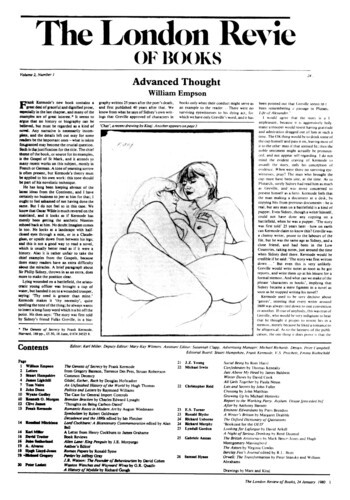
The terms on which this book is set up are prefigured in the split title – Allen Lane: King Penguin. In Elizabethan drama the king’s two bodies might well be a theme for tragedy, and...

Whose Candyfloss? Richard Hoggart

Christopher Hilliard, 17 April 2014

Richard Hoggart​ made much in his writings of the scholarship child’s uprootedness and anxiety, but his own dislocation had its limits. Although he went from a primary school in a poor...

Unwritten Novels

Doris Lessing, 11 January 1990

There are some subjects it is almost impossible to believe have never found a novelist. How about Marx’s household? It was a composite of Victorian dramatic stereotypes.

Sing like Parrots: Ngugi wa Thiong’o

Adéwálé Májà-Pearce, 15 December 2016

In 1962​ the young Ngugi wa Thiong’o had a piece of good fortune. He had left Kenya for Uganda, where he was enrolled as an undergraduate at Makerere, in Kampala. As he explains in Birth...

Desire Was Everywhere

Adam Shatz, 16 December 2010

Like many professional subversives, Deleuze and Guattari worked well in institutions.

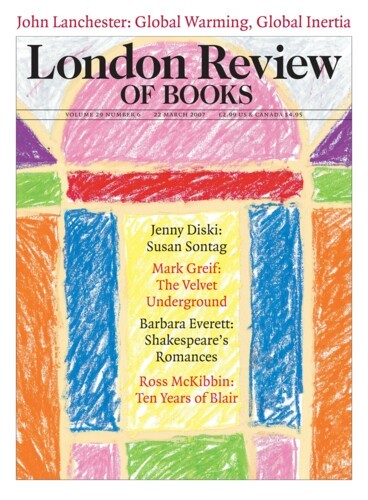
Still Superior: Sex and Susan Sontag

Mark Greif, 12 February 2009

One of the most appealing things about Susan Sontag was that she didn’t ask to be liked. Other postwar American writers who cut the same sort of public figure pleaded with you to love their...

Eyes that Bite

Anne Enright, 5 January 2023

Toni Morrison is not envious of her characters. They are not punished for the qualities she has given them. Pride does not always come before a fall. Beauty is not bestowed so it might be marred or destroyed. The people in her pages are allowed to love one another and forbear from cruelty. The punishments meted out might be catastrophic, but they have clear origins in the unbearable realities of racism.

Calvino

Salman Rushdie, 17 September 1981

At the beginning of Italo Calvino’s first book for six years, an entirely fictional personage named You, the Reader, buys and settles down with a novel which he firmly believes to be the...

Diary: Putting in the Commas

Mary-Kay Wilmers, 15 September 1988

Writers tend to regard editors, whether in journalism or in publishing, as people who have failed in the endeavour which they conceive themselves to have mastered and now wish merely to tamper with the results of their labour. In that scenario, women editors are a still lower form of life and I sometimes have the feeling that writers send me their articles as they might send me their laundry: as if, like washing and ironing, it’s a woman’s job to correct the spelling, and put in the commas.