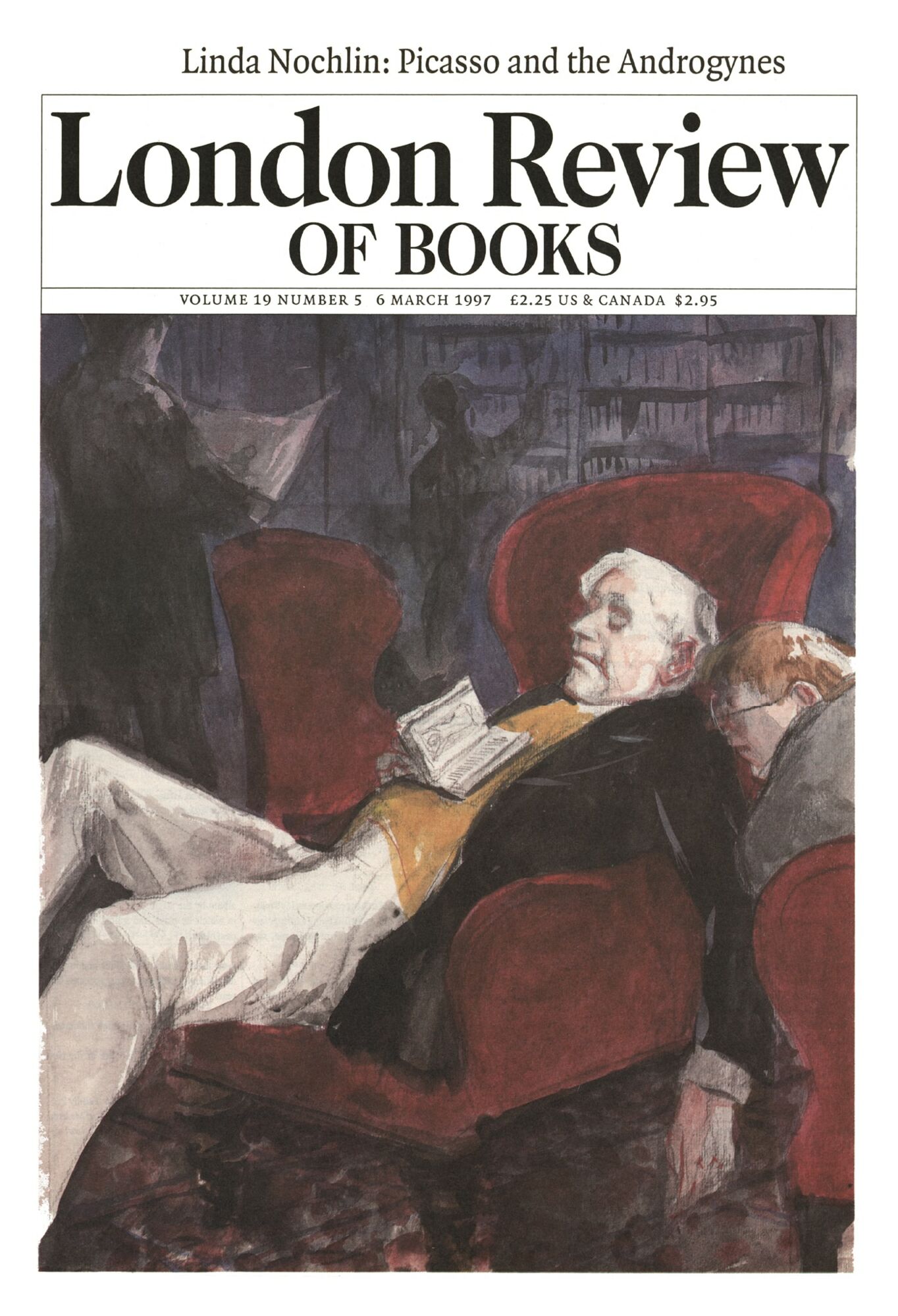
Nothing proves a better test of historical difference than what we all have in common. Like us, the Victorians thought the death of the young more terrible than that of the old; they found sudden loss more difficult to cope with than losses they had long anticipated; they relied on family and friends for comfort in times of bereavement; they took solace from memories of the dead, whom they were inclined, at least in the early stages of their grief, to idealise. Some of our received opinions about the Victorians’ mortuary excesses owe as much to their own self-criticism as to their actual practice: contemporary reformers were quick to denounce the expensive funerals popular at the beginning of the period, for example, just as they later campaigned against the ‘ghoul-like ghastliness’ of extravagant mourning-dress for women. Then as now, there were many ways of dying and many modes of grieving for the dead. But a death in the Victorian family did differ radically from one in our own – if only because ‘in’ the family was hardly a figure of speech. Until the First World War, the event almost invariably took place at home. And until the later decades of the century, Jalland argues, it typically took place in a climate of religious belief that made all the difference not only to the dying but to those left behind.
Thanks to the Evangelical revival, a very specific model of how to die well dominated the thinking of early Victorians – shaping the aspirations, if not always the achievement, even of High Anglicans and Tractarians. At home, surrounded by family members, the dying took leave of the world, having had ample time to resign themselves to God’s will, beg forgiveness for their sins and demonstrate their worthiness to be saved. Pain and suffering were not only borne with courage but welcomed as a final test of merit and an opportunity for atonement. Ideally, the death-bed provided an instructive scene for the living, an occasion for the witnesses to reaffirm their faith and prepare their own souls for the end. To die ‘badly’, on the other hand, was to die unprepared and suddenly – the death so often preferred by the unbelieving generations to come. Like us, Jalland suggests, later Victorians increasingly came to think of a ‘good’ death as one that occurred painlessly and without warning: a heart attack in the night rather than a long consumptive decline. When their father died of typhoid in 1900, Leo and (Katherine Maxse congratulated themselves not only on his lack of pain but on his peaceful ignorance of what was happening – ‘a 20th-century perception of a good death’ far removed from the Evangelical death-beds of a half-century earlier.
Although Death in the Victorian Family draws on a range of published material, from Evangelical tracts and magazines to the columns of the Lancet, its principal evidence consists of private memoirs, letters and diaries, a record covering almost a century (1830-1920) in the manuscript archives of 55 families. Jalland calls her work ‘experiential history’, but, as she is quick to acknowledge, the experiences in question are strictly confined to the recording classes: herwitnesses include ‘politicians, scientists, clergymen, diplomats, landowners, doctors and intellectuals’, but not, for example, tenant farmers or industrial workers. Especially in the early decades, when Evangelical influence was at its strongest, a number of these family members not only corresponded with one another but deliberately set out to produce death-bed memorials – detailed accountings of the medical and spiritual progress of the dying in their midst. Jalland argues that there is no reason to consider her sample unrepresentative of middle and upper-class Victorians generally, but her method of selecting her material inevitably over-represents those who thought such records of death worth making and preserving.
Yet even those most inspired by the Evangelical model usually died well short of their ideal, and the private chronicles of their last days prove markedly less triumphant and sanitised than the published formulae. ‘Some die so bravely – I die so stupidly,’ Margaret Gladstone reportedly announced when she lay dying of puerperal fever in 1870. As Jalland makes clear, infectious fevers did not lend themselves especially well to the calm preparation a good death required. Though the devout mother who transcribed Margaret’s remark in her journal managed to understand her daughter’s death as a triumph of faith, the doctors’ confusion about the cause and treatment of child-bed fever did little to ease the passage. Margaret at least succeeded in getting her husband to read some favourite lines from In Memoriam the night before her death; and she declared at one point: ‘I am so glad to go.’ Two decades earlier, another dying Gladstone – the Prime Minister’s father – ingloriously left his family to recall his last words as ‘Bring me my porridge.’
If the Victorians seem more prepared for death than we are, that is not only because the promise of an after-life encouraged them to plan ahead. Death took place often in the 19th century: the statistics on infant mortality in particular remind us of the appalling regularity with which families could expect to bury their own. Until the rates began to decline at the turn of the century, over 100,000 children a year failed to reach their first birthday – approximately 15 per cent of the annual live births in England and Wales. Poor children died more often than rich ones, but comfortable circumstances didn’t shield anyone from the prospect of losing a child. In 1856, Archibald Tait, then Dean of Carlisle, was appointed Bishop of London, but not before scarlet fever had killed five of his seven children in rapid succession. As each took sick in turn, her hair was cut off and burned (those who died were all daughters), and the parents made new arrangements for quarantine, only to watch, more or less helplessly, as the next one succumbed. Jalland dwells at some length on the death of the eldest girl, ten-year-old Cattie, whose solemn approach to the end – at least as reported by her grieving parents – came very near the ideal disseminated by pious fiction and tracts. When the dying child ‘pointed upwards with her finger as if to show us where we should all meet’ and her father burst into tears, Cattie beckoned him to her, wiped away his tears with her hand, ‘and tried in every way to comfort him’. Lawrence Stone has argued that the frequency with which children died in earlier periods meant that parents had less emotional investment in each one, but Jalland’s subjects do not appear to have been governed by this affective economy. The early Victorians, she contends, cared as much and grieved as intensely as the Edwardians.
Nineteenth-century families were also prepared for death because their doctors could do so little to avert it. Increases in life expectancy came from public health reforms and higher living standards rather than advances in medical science; not everyone who fell ill with cholera or typhus died from it, but the illusion that one’s doctor might indefinitely delay the day of reckoning is a 20th-century phenomenon. For all their awareness of medicine’s therapeutic deficiencies, however, middle and upper-class Victorians tended to look quite warmly on their doctors, whom they saw less as skilled technologists than as ‘loyal family retainers’. Though he usually couldn’t cure, a physician could take good care, and a 20th-century reader may envy all the extended house-calls described here and the assiduous vigilance at the bedside – not to mention, in the earlier decades at least, the generous use of opium. (Fears of working-class addiction led to severe restrictions on the drug later on.) When William Munk published his influential textbook, Euthanasia, in 1887, he used the term in its classical sense of ‘a calm and easy death’, not a medically assisted one. The modern conception of ‘euthanasia’ as mercy killing did not come into common use until the turn of the century.
Our own controversies about dying focus on the morality of unduly prolonging life as well as of prematurely ending it, but the Victorians generally lacked the technological capacity for what we choose to call ’heroic’ measures. It was presumably rank and wealth that inspired the doctors’ extraordinary efforts in 1900 to keep the eighth Duke of Argyll alive, though they themselves argued that the Duke’s ‘high breeding’ made ‘life almost incapable of leaving the body’. While that diagnosis has a distinctly archaic sound, the prolonged ordeal of the family, as the doctors administered oxygen and injected strychnine into their senile patient, provides a bitter foretaste of the century to come.
The daughter who recorded the Duke’s last days had little of the emotional resilience that seems to have characterised earlier watchers at the death-bed. ‘My horror of death is such,’ Frances Balfour wrote after one premature announcement that her father was dying, ‘that these summonses always give me deadly faintness, and I have a great struggle with myself.’ Closer in spirit to this century, the Duke’s daughter ‘had no particular ideal of a good death, merely a horror of death in general’, Jalland writes somewhat severely, ‘and she lacked the spiritual resources to construct a model’. But if Jalland does not always avoid some nostalgia for the Victorians’ apparent superiority in such matters, she is scrupulous enough to acknowledge that they differed among themselves almost as much as they differed from us. Her harrowing account of the protracted end of Ada Lady Lovelace suggests how the same model of a good death that provided inspiration and comfort might also serve as an instrument of torture. Though Byron’s daughter was herself a freethinker, the devout Lady Byron insisted on producing a death-bed repentance. While Ada died slowly and painfully of cancer, her mother managed not only to wrest control of the sickroom from Lord Lovelace and to banish unorthodox friends like Charles Babbage, but to extort the dying woman’s confession of adultery with a neighbour, thereby permanently alienating the married couple. Though Lovelace began an idealised account of the courage with which his wife confronted her suffering, the revelation of his betrayal seems to have put an abrupt end to his narrative. Meanwhile Lady Byron kept a relentless record of her own attendance at the death-bed. When Ada whispered one day that she still hoped to live, her mother responded with pious asperity: ‘You are dying – you may not have another day – use it well.’
Few non-believers presumably met with such sustained bullying, although Jalland argues that the first generation of Victorian agnostics ‘could feel particularly isolated when confronting personal crises’. In the case of Charles Darwin, she suggests, the combined effect of family history and free thought produced an acutely ‘inhibited’ response to pain and death. Just as he could not bring himself to attend the funeral of his father in 1848, so he also avoided the ceremony for his favourite child, the ten-year-old Annie, some three years later. Harriet Mattineau, on the other hand, claimed to have abandoned the ‘selfish complacencies of religion’ without the slightest regret. Writing in 1855 in the mistaken belief that she was dying, she declared the prospect ‘the simplest thing in the world, – a thing not to be feared or regretted, or to get excited about in any way’. Though she had anticipated the date by more than two decades, there is no evidence she ever thought her view of death itself had been in error.
Jalland argues that the Christian wives of sceptics like Darwin and T.H. Huxley found the loss of their children all the more ‘traumatic’ because they could not share their consoling faith with their husbands. But even in families more or less united in their belief, the difference between men’s and women’s experience of death could be considerable. Responsibility for the care of the sick and dying fell overwhelmingly to the women of the household: well after middle and upper-class families began to employ trained nurses in the 1870s, wives, mothers and unmarried daughters, assisted by female servants, continued to exercise their ‘natural’ aptitude for nursing. Consciously or not, large Victorian families often managed to keep one spinster in each generation at home for the purpose. Jalland speculates that women’s training in submission helps to explain why her female subjects seem on the whole to have been more resigned to death than the men, but daily contact with the ailing body may also account for some women’s readier acceptance of the inevitable. At the same time, women were not thought self-controlled enough to risk their attendance at funerals: for most of the century they were advised to stay at home, though by 1893 Lady Colin Campbell’s Etiquette recommended that those able to ‘keep their grief within due bounds’ might safely ignore the custom.
Gender made a still more substantial difference after the funeral. While men were encouraged to forget their grief in work, women were expected to give themselves over to mourning. As in our own time, the widows greatly outnumbered the widowers: not just because women tended to live longer but because men, predictably, were apt to console themselves by remarrying quite soon, and by then choosing younger women. For women who had learned to think of themselves primarily as wives and mothers, widowhood could be an especially devastating experience, all the more so, of course, when the deaths of husbands entailed significant downward mobility. A notable exception to the rule, the shocking widowhood of the third Lady Holland, only emphasises how aggressively ‘unfeminine’ a woman it took to defy the constraints most women faced. Boldly resuming her celebrated political salon only three months after the death of Lord Holland, his widow proved equally cool to their children, both legitimate and otherwise. When she in turn succumbed some five years later, her son reported with some satisfaction, the doctors confirmed that ‘her heart was a perfect stone!!!’
Modern thanatologists identify anger as a normal stage of the mourning process, but despite the comparative grimness of Victorian widowhood, few of these widows felt as predicted. Or rather, few of them left any written records of the feeling. Jalland sensibly suggests that some may have refrained from mentioning it because they regarded such feeling as unacceptable for Christians, though she also thinks that their genuine faith and greater familiarity with death may simply have made these bereaved women less angry. Here as throughout, the argument comes up against the limits of an ‘experiential’ history recovered from the language in which respectable families chose to preserve their emotions for posterity. How much 20th-century anger at death is committed to paper, rather than voiced – with some encouragement – in private, to the therapist?
Jalland’s respect for her subjects is preferable to the condescension often visited on the past, but her willingness to take the Victorians at their word sometimes strikes me as excessive. Summarising the letters of condolence received in 1843 for Harry Goulburn, the eldest son of Peel’s Chancellor of the Exchequer, she remarks: ‘those friends and relatives who had known Harry well were genuinely convinced by his Christian life and devout preparation for death that he enjoyed the “sure and certain hope of ... eternal blessedness”.’ When such language begins to disappear from condolence letters later in the century, Jalland characterises what remains, or much of it, as ‘trite phrases’ and ‘platitudes’ – though the restrained formulations of 19th-century agnostics hardly seem less eloquent than the pious expressions she has quoted previously. Jalland acknowledges that the language of religious consolation ‘may seem sentimental or formulaic to modern eyes’, but to the Victorians, she asserts, ‘it conveyed genuine meaning and comforted believers.’ Those who believed were presumably comforted accordingly, but only a certain nostalgia for lost faith would lead one to imagine that the rhetoric of consolation has ever testified unproblematically to the truth of feeling.
It has become commonplace to lament our own culture’s ‘denial’ of death, especially by comparison with earlier periods. Though Jalland is more interested in recreating the past than criticising the present, her book provides ample evidence that the 19th century was more at home with death than we are. Yet to the degree that both the dying and their survivors genuinely believed that death was not in fact the end, they, too, had their strategies for refusing to think the unthinkable. Rather than contrast the Victorians in these matters with ourselves, it might be more fruitful to think of the 19th century as the time when one form of denial gradually gave way to another.
Send Letters To:
The Editor
London Review of Books,
28 Little Russell Street
London, WC1A 2HN
letters@lrb.co.uk
Please include name, address, and a telephone number.
