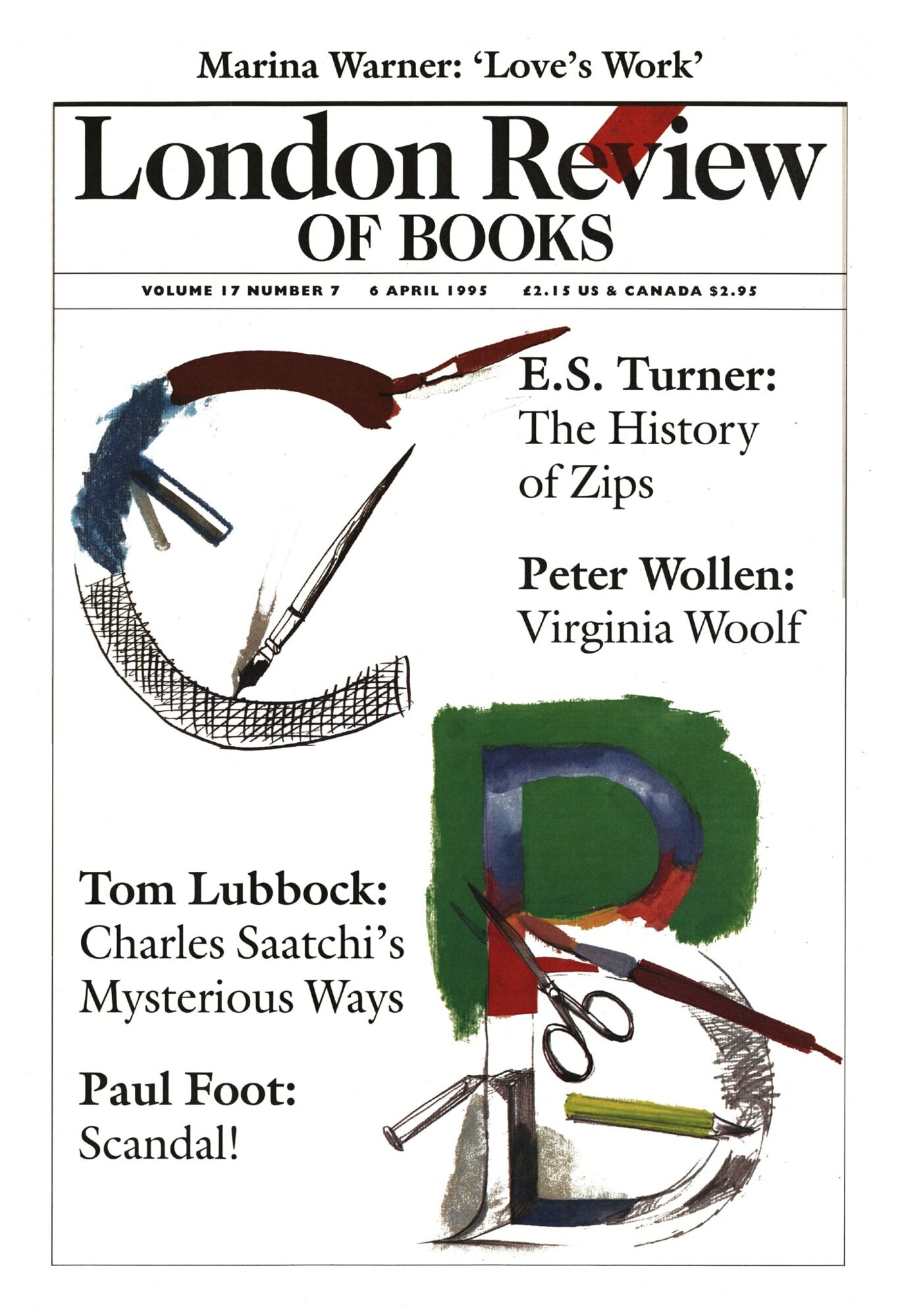
In 1978, at a seminar on John Maynard Keynes held by the University of Kent, Raymond Williams talked about ‘The Significance of Bloomsbury as a Social and Cultural Group’. He accepted Leonard Woolf’s characterisation of Bloomsbury as consisting ‘of the upper levels of the professional middle class and county families, interpenetrated to a certain extent by the aristocracy’ with ‘an intricate tangle of ancient roots and tendrils stretching far and wide’ through those classes. Williams also noted the importance of the Imperial bureaucracy in this tangle, especially the top echelons of the administration of India. Finally, he characterised Bloomsbury as an upper-class ‘fraction’, which turned against its own class without identifying itself with the subaltern classes and peoples, except insofar as it saw them as ‘victims’. This fraction played an important ‘liberalising’ and ‘modernising’ role, producing ‘adaptations’ rather than ‘basic changes’. It was against the ‘dominant ideas and values’ of the English upper class, while ‘still willingly, in all immediate ways, part of it’.
Williams also developed another of Leonard Woolf’s ideas, that Bloomsbury was a group similar to the Utilitarians or the Pre-Raphaelites, both of which, in fact, had direct links with the Stephen family. Williams contrasted the Bloomsbury Group with the Godwin circle of the 1780s and 1790s, which he saw as a genuinely oppositional group, whose ‘rational and civilising proposals’ were ‘met by the crudest kind of repression: prosecution, imprisonment and transportation’. At that time, Williams argued, the commercial bourgeoisie was still a subordinate class. By the middle of the 19th century and the Pre-Raphaelite Brotherhood, the commercial bourgeoisie had become dominant and consequently their revolt was both ‘against the class and for the class’. Despite their revolutionary stance in 1848, they renewed their class rather than challenging it. Bloomsbury combined elements of both: like the Godwin circle, it represented a new class sector, the professional rather than commercial bourgeoisie; but, like the Pre-Raphaelites, its challenge to dominant values and tastes could easily be folded back into the culture of the upper class, without seriously threatening that class’s social and political power.
It is easy to see the plausibility of Williams’s account. We need only call to mind a passage from Alan Clark’s diaries. Clark, himself a second generation fringe-Bloomsbury figure, priding himself on his ‘irreverence’, records two occasions on which he broke into tears. The first was when he shot a heron which had been attacking the fish in the moat at Salt-wood Castle. The second was on the occasion of a ‘Bloomsbury evening at Saltwood. We entertained the “Friends of Charleston”.’ Clark stuffed the Garden House with Bloomsbury ‘items’ and in the Great Library there was a performance by Eileen Atkins of Woolf”s A Room of One’s Own. ‘How well she did it! And what a beautiful, moving and dignified text it is. The audience listened in a rapt silence and at the end I had tears in my eyes.’ Among the Bloomsbury ‘items’ commissioned by Kenneth and Jane Clark was a grand Wedgwood dinner service created by Vanessa Bell and Duncan Grant in 1935. The two artists chose to paint the 48 plates (out of 140 pieces) with a series of portraits of great women, including Vanessa Bell and Virginia Woolf themselves. ‘It ought to please the feminists,’ Bell observed. In a way, this incident was a model example of how the challenge posed by Bloomsbury could be re-absorbed into the trivial project of Civilisation, the creation of a lifestyle for a cultivated élite. Similarly, A Room of One’s Own can be read either as a militant feminist manifesto or as a plea for a privileged rentier culture, a weakness discussed forthrightly by Woolf herself in her essay, ‘Am I a Snob?’
In the discussion session which followed Williams’s paper, Bernard Sharratt remarked that although the Godwin circle had been repressed it nonetheless had had an influence on Hazlitt, whose critique of Malthus and Ricardo suggested an ‘alternative direction’ that could have been developed further. The Pre-Raphaelites had a similar impact on Morris. With Bloomsbury, Sharratt said that we might look at the avenue Keynes opened up by connecting economic theory with psychoanalysis. Sharratt’s argument was that though these groups might have been re-absorbed, they always left a subversive residue, a part maudite, which provided the potential for a deeper challenge. Williams accepted much of this. With the Godwin circle, he said, the potential was simply stamped out; with the Pre-Raphaelites, there was indeed such a potential – he cited Madox Brown’s house, where ‘there were not only artists but also atheists, political refugees, vagrants: there was the kind of widening which was questioning the order of a much wider area’ – and this did link to Morris’s development. But Williams could not see Keynes in the same light – ‘by 1946, Keynes is at the heart of the world capitalist system, designing a new monetary order.’ Williams also noted Keynes’s enjoyment in playing the role of squire of Tilton, complete with a covey of partridge on his stubble and a less than perfect relationship with his farm labourers.
Today, we might look at Keynes a little differently. Nonetheless, where was the subversive residue left by Bloomsbury? Here, I think, we must return to Virginia Woolf. As Quentin Bell observed at the same conference, commenting on the re-interpretation of her work by feminist writers, ‘it would be very dangerous to dismiss Virginia Woolf as a major political influence.’ Bell referred specifically to ‘a flow of correspondence and published work’ sent to him from the USA. Perhaps he was being unfair to British feminists, but I don’t think there’s much doubt that the rediscovery of Woolf as a feminist came primarily from abroad and that this, in turn, raises an important issue. To what extent was Bloomsbury a specifically British phenomenon, and to what extent a genuinely cosmopolitan group?
Williams saw Bloomsbury exclusively within a British tradition. He was, after all, the author of Culture and Society, a book which traced the genealogy of the idea of culture in Britain as though the rest of the world hardly existed. Yet he noted that the Godwin circle had carried French Enlightenment ideas into England and that the Pre-Raphaelites had supported the revolutions of 1848 and welcomed political refugees into their circle. Does the subversive residue always involve an ingestion and mutation of alien ideas? What were Woolf’s connections to the international Modernist avant garde? These questions are important if we are to understand her specific role in Bloomsbury, and what differentiated her from others in the group. James King’s new biography, punctilious but pedestrian, gives us an opportunity to think anew about these questions, condensing, as it does, twenty years of scholarship and research since Quentin Bell’s classic two-volume Life came out in the early Seventies.
The standard version of Woolf’s encounter with Modernisms begins as follows: ‘In, or about December 1910, human character changed.’ Woolf’s aphoristic judgment is usually taken to refer to the Post-Impressionist Exhibition, organised by Roger Fry, which opened, in fact, on 8 November 1910. Plainly, this was the moment when the European avant garde shattered the calm of the Edwardian art world. It is still hard to see, however, why it should have changed ‘human character’, or how its influence eventually fed through into Woolf’s work. It was not until the Twenties that she wrote the books that gave her the reputation of a Modernist. Her famous attack on the Edwardian novel in ‘Mr Bennett and Mrs Brown’ was first delivered in December 1923 and republished, in expanded and revised form, as a Hogarth Press pamphlet the following year.
The Post-Impressionist Exhibition was important because it brought Roger Fry to the forefront of Bloomsbury and because it led to the founding of the Omega Workshops, clearly an extension of Parisian Modernism – of the world of Matisse, Poiret and the Ballets Russes. Matisse was a distant hero, but Bloomsbury’s relations with Poiret (the fashion designer who had abolished the corset and introduced trousers for women) and Diaghilev were close. In May 1912, Fry held an exhibition of British Modernists – Vanessa Bell, Frederick and Jessie Etchells, himself, Duncan Grant, Wyndham Lewis, Helen Saunders and some others – at the Galerie Barbazanges in Paris, which was located on the ground floor of Poiret’s imposing residence at 109 rue Faubourg St-Honoré, next door to the Martine interior design workshop which served as the model for Omega. The impact of the Ballets Russes on Bloomsbury was enormous and lasting. Omega’s first major commission came in 1913, from Lady Hamilton, whose niece worked for Diaghilev, and who, in Judith Collins’s words, wanted to turn her own home into ‘the approximation of a stage-set for a Diaghilev ballet’. The influence of the Ballets Russes went much deeper than décor, however. As Peter Jacobs writes, it supplied a model of ‘a pagan liberty and a savage beauty, combined with a stylised severity or formal purity’, a liberty and a beauty embodied, one might add, in Nijinsky’s legs, to gaze on which Keynes briefly abandoned his Treatise on Probability.
In her last novel, Between the Acts, Virginia Woolf described the darting swallows, a key motif of the book, as seeming ‘to make a pattern, dancing, like the Russians, only not to music, but to the unheard rhythm of their own wild hearts.’ But she was never as enthusiastic about the Ballets Russes as Roger Fry, or Lytton Strachey, or Maynard Keynes, who married Lydia Lopokova and launched the Camargo Society, which was influential in the development of ballet in Britain. Nor did she much like the Poiret-influenced clothes Vanessa Bell designed for Omega, remonstrating with her sister: ‘My God! What colours you are responsible for! Karin’s clothes almost wrenched my eyes from the sockets – a skirt barred with reds and yellows of the vilest kind, and a pea-green blouse on top, with a gaudy handkerchief on her head, supposed to be the very boldest taste. I shall retire into dove colour and old lavender, with a lace collar and lawn wristlets.’ Despite her ironic tone, Virginia Woolf had an aversion to fashion and dressed badly herself, almost with a kind of exhibitionistic awkwardness. Matisse, on the other hand, she admired and even thought of buying a seascape by him on a trip to France in 1923. (During this trip she cut Aldous Huxley and his wife, disgusted that they looked as if they had stepped out of the pages of Vogue.) When Duncan Grant had painted murals in Brunswick Square in 1912, he decorated Adrian Stephen’s drawing-room and Keynes’s massive room on the ground floor, but Virginia Woolf’s upstairs rooms were unscathed.
December 1910 was also the month in which the Neo-Pagans exploded. This group, dubbed ‘Neo-Pagan’ by Woolf herself, sprang up in the Cambridge generation which followed after Bloomsbury. It was centred on Rupert Brooke, as Bloomsbury had been centred on Virginia’s brother Thoby Stephen. Brooke was an Apostle, bisexual, a devotee of the Ballets Russes (11 visits in one season, including Schéhérazade three times), a Fabian and, of course, a writer. Virginia Woolf first came into contact with Brooke’s group in January 1911, when she met Ka Cox at Bertrand Russell’ house in Oxford. The previous month, Brooke had left Cambridge to support the Labour candidate in the General Election, fulminating against the Tories, who had commandeered all but 12 of the motor cars in his constituency, and writing to Ka Cox: ‘It is not true that anger against injustice and wickedness and tyrannies is a good state of mind, “noble”. Oh, perhaps it is with some, if they’re fine. But I guess with most, as with me, it’s a dirty mean choky emotion. I HATE the upper classes.’
After Christmas, he went to Lulworth Cove to see the New Year in with Ka Cox and Jacques Raverat. It was there that he decided to give up his doomed love for Noel Olivier – the youngest of the four Olivier sisters, she was still at school – and begin his troubled affair with Ka Cox, which started on the wrong foot with a bitter quarrel in a bookshop whose true point has been lost in obscurity. The next week, Brooke left for Munich, the bohemian and artistic capital of Germany, where he mingled with the Stefan George circle, saw Alexander Sacharoff dance with his face painted violet, fell into a woman’s arms at the end of Carnival, and returned to England to live in the Old Vicarage, Grantchester. In his absence Virginia had become close friends with Ka Cox, and soon met Jacques Raverat, who claimed to be in love both with Gwen Darwin, whom he asked to marry him, and Ka Cox, whom he asked to be his lover after he was married. Raverat, though French, had been sent to school at Bedales, from where he had gone on, first to the Sorbonne, then to Cambridge, where he met Brooke, Ka Cox and Gwen Darwin, the daughter of a don and granddaughter of Charles Darwin. Later, both Darwin and Raverat studied art at the Slade.
Virginia Woolf was fascinated by these Neo-Pagan entanglements, the sense of Rabelaisian sexuality, the counter-cultural world created around Brooke – bohemian, simple-lifer, vegetarian, nudist and poet. When Brooke returned from Munich he invited Virginia to Grantchester, where they bathed nude together. He also laid his plans for what became known as the Bloomsbury Summer Camp at the end of August, on the banks of the River Teign in Devon. There Rupert, Virginia and Ka were joined by James Strachey, Maynard Keynes (whose brother Geoffrey was a close friend of Brooke), three of the Olivier sisters and a party of old Bedalians. Lytton Strachey lurked nearby. They slept under canvas, close to the earth, rose early to watch the sunrise, put on theatrical shows and ate summer pudding, while Brooke sat apart in the middle of a meadow, where there was no shade, reading Keats’s letters to Fanny Brawne.
In the end, everything went bad. Brooke went off distraught to Germany again, where he wrote ‘Stands the church clock at ten to three/And is there honey still for tea?’ sitting at his window table in the capital of Berlin bohemianism, the Café des Westens, alias the Café Megalomania, where Expressionist poets, anarchists, vagabonds, occultists, visionary cranks and avant-gardists whiled away the hours. Soon the war swept them all away. Brooke had a nervous breakdown in 1912 and was ‘stuffed’ by Dr Craig, as Virginia Woolf was the following year. After his recovery, he went off to America and then to Tahiti to live à la Gauguin, returned to England, enlisted, died of septicaemia, and was buried on a Greek island. Thoby Stephen had died in Greece of typhoid. Brooke’s funeral oration in London was given by Sir Ian Hamilton, his Commander-in-Chief and husband of the Lady Hamilton who had patronised the Omega Workshops. Jacques Raverat eventually married Gwen Darwin. Ka Cox nursed Virginia Woolf through her breakdown and remained her closest friend until Cox married in 1918. After her death, twenty years later, Virginia Woolf observed that Ka’s life had virtually ended when Rupert died. His death echoed Thoby’s, and the character of Percival in The Waves can be seen as a composite of the two.
Brooke’s world, with its ties to the German counter-culture, was in many ways more cosmopolitan and certainly much more avantgardist than that of Bloomsbury. Brooke, for example, met Pound and Lawrence, while Virginia Woolf never did. He reviewed Personae in 1909 in the Cambridge Review and saw brilliance as well as obscurity, the work of a poet who could become great. He read Sons and Lovers on a transatlantic liner and remarked on its extraordinary vividness, concluding: ‘He’s a big man.’ He wrote about the Post-Impressionist show, arguing that ‘expressionist’ would have been a better description. In some respects, the Neo-Pagans set a pattern for ménages à trois, for bisexual anguish, for tragic love affairs – which Bloomsbury later followed. Virginia Woolf later reproached Ka Cox in her journal for being stuck in 1911, ‘copulating with Rupert Brooke in Berlin’. She had herself turned away from the Neo-Pagans in 1911, when she decided to marry Leonard Woolf. Yet when she had her own breakdown, she followed Rupert Brooke to Dr Craig for the ‘stuffing’ cure. Brooke set an example of how to live which was both fascinating and dangerous. In the end, like so many avant gardists – Pound, Ball, Benn, Eliot – he could have swung to the right politically. Virginia Woolf wrote later that she saw him as a politician rather than a writer. If so, we can imagine him following – or leading – Oswald Mosley down his political path from socialism to Fascism. Woolf, on the other hand, was far too deeply imbued with Enlightenment rationalism to travel down that road.
In the end, Woolf, too, had to come to terms with international Modernism. In 1915 she was ‘swept away’ by Dostoevsky. She read Chekhov the next year and still more Dostoevsky, whom she wrote about in 1917. That same year, Leonard and Virginia founded both the Hogarth Press and the 1917 Club, in honour of the February Revolution, their own 1848. Harriet Weaver brought them the manuscript of Ulysses, on Eliot’s suggestion, in the hope that the newly-founded Hogarth Press would publish it. A few years later, Edith Sitwell arrived on the same mission, bearing Gertrude Stein’s The Making of Americans. The Hogarth Press had the singular distinction of turning down both, but Virginia Woolf must have read them and they certainly influenced her work: Mrs Dalloway tells the story of one day in a great city, The Waves shows a Steinian preoccupation with rhythm and repetition.
In 1918, she met Eliot for the first time and disapproved of him for praising Joyce, Pound and Lawrence. By 1921 she was referring to Eliot and herself as ‘we’ and in 1922 the Hogarth Press published The Waste Land. In 1921 Roger Fry introduced her to the work of Proust, whose influence was enormous, superseding that of Dostoevsky. There was a need to go beyond Chekhov and Dostoevsky, partly because the previous year she had been irked by a review of Katherine Mansfield which had compared her writing favourably to the Russians. In 1921 she also read Women in Love, although she may have skipped, and the next year she renewed her relationship with Jacques Raverat.
Now dying of multiple sclerosis, Raverat had already turned to the right – like Brooke he was anti-semitic, and he had become a follower of Belloc and Chesterton, a ‘distributionist’ – but he was also a close friend of André Gide. Virginia Woolf sent him the proofs of Mrs Dalloway to read at his home in France. It was during this period that she first really came to terms with Modernism as an international movement not so much because she was interested in Modernism as such, but because, partly impelled by her rivalry with Katherine Mansfield – and, less directly, with Gertrude Stein and Dorothy Richardson – she needed to find a way of writing appropriate to the 20th-century woman. Her Modernism was an epiphenomenon of her feminism. The example of Post-Impressionism and the Neo-Pagans had shown Woolf that if she was to be modern she must go beyond Pater and James – let alone Bennett and Wells – in the search for ‘significant form’, and in order to register changes in character and psychology. Writing about Richardson, she noted that she ‘fashioned her sentence consciously’ in order to investigate the psychology of her sex. Woolf recognised that Modernism would allow her to follow this path, but less didactically, less purely subjectively, and on a far grander scale.
The link between feminism and Modernism had already been established by Dora Marsden and Harriet Weaver. In December 1910 (once again), Dora Marsden was working to defeat the Liberal candidates standing in the General Election in Lancashire, where she ran the Manchester office of the WSPU. She had a heroic place in the Suffrage Movement: she had been awarded their Victoria Cross and had made headlines time and time again with her wild and dangerous exploits. However, she aroused the Pankhursts’ wrath in December 1910 for breaches of discipline and resigned in a fury the following month. Soon afterwards she came to London, where her old friend Theresa Billington had published a tirade against the Pankhursts in the New Age, calling for a true feminist revolution, which would free women from ‘all shackles of law and custom, from all chains of sentiment and superstition’.
Inspired by the call for total emancipation, not simply the vote, Marsden founded the Freewoman, financed by the same radical publisher who brought out Katherine Mansfield’s early work. Later, when he defaulted, she refounded it as the New Freewoman, before turning it into the Egoist after she had been converted to anarchism by Max Stirner’s Ego and His Own. Originally a voice for feminists who disagreed with the anti-sex views of the Pankhursts, publishing articles by Billington, Stella Browne, Rose Witcop and other sexual radicals, the Freewoman and its successors gradually turned into a journal in which feminist politics was only one strand. Along the way, Harriet Weaver, a socialist feminist, became the editor, assisted by Rebecca West, who told Marsden: ‘I don’t see why a movement towards freedom of expression in literature should not be associated with your gospel. Tell me, did you ever try to get any short stories or literary essays?’ Soon afterwards, West brought Ezra Pound in to run the literary section, a development which led, in due course, to Weaver taking charge of the publication of A Portrait of the Artist as a Young Man by the Egoist Press and, eventually, finding a publisher for Ulysses.
Woolf’s interest in feminism and Modernism was very different from Marsden’s or Weaver’s. Nonetheless, their independent efforts indicate that there was a natural affinity between the two, once feminism was interpreted as a wider issue than suffragism. Marsden, Weaver and Woolf believed in a feminism that involved a broad attack on ‘the shackles of law and custom’ in everyday life and in the arts. From this straggle, radical feminists believed, women had the most to gain. Three Guineas was very much in this tradition, even if Woolf herself recoiled from the ‘filth’ of Joyce. Early Modernism was tightly interlocked, from the start, with the simultaneously emerging idea of ‘sexual polities’. This was particularly the case, of course, when the writer was a woman or gay or sexually confused or tormented, or some combination of these, as was surely the case with Virginia Woolf. The fact that so many Bloomsbury figures were involved in illegal sexual activities, in what Edward Carpenter called ‘triune’ marriages, in spectacularly complicated and catastrophic love affairs and in wild infatuations with inappropriate partners is not trivial or irrelevant to the introduction of Modernism in Britain, however much Eliot – or Woolf herself – sought after distance and ‘impersonality’ in their own art.
The connection between Bloomsbury and the Freewoman circle can be traced through Edward Carpenter. He was a committed supporter of the Freewoman, a contributor to the New Freewoman and an inspiration to others who wrote in the journals. He was also a crucial influence on Roger Fry, who, as a young man, made the pilgrimage to his house at Mill-thorpe. Forster, too, was a loyal disciple of Carpenter and it is plain that Carpenter, along with Pater and Symonds, was one of a triad of queer role models who not only had personal ties with Bloomsbury, but inflected the course of the group as a cultural movement. Many of the Neo-Pagans, including Raverat and the Olivier girls, had been at Bedales, a progressive co-educational school whose founder was influenced by Carpenter’s utopian sexual and political theories, and whose teachers wore hygienic Jaeger clothing and were feminists, socialists and Tolstoyans.
The maintenance of the Indian Empire, so central to the class from which Bloomsbury came, entailed a rigid form of patriarchy, an insistence on a division of races which required, as its homology, a rigid division of the sexes. It is precisely this institutionally and politically driven psychology which Bloomsbury challenged: its subversive charge lay in its sexual rather than its class politics. In Woolf’s case, the widening-out of a narrow ‘votes for women’ suffragism, which was the precondition for her greatest novels, was made possible by the encounter with Modernism. When Harriet Weaver brought the manuscript of Ulysses to her, Virginia Woolf noted: ‘I did my best to make her reveal herself in spite of her appearance, all that the editress of the Egoist ought to be, but she remained unalterably modest, judicious and decorous. Her neat mauve suit filled both soul and body; her grey gloves laid straight by her plate symbolised domestic rectitude.’
Woolf had found herself faced with a woman who embodied even more extremely than herself the competing tensions of conformity and nonconformity. In each, despite appearances, there was an absolutely unassimilable core, a part maudite. The Bloomsbury fraction, and especially Virginia Woolf, can never quite be assimilated, can never be reduced simply to English upper-class taste and values, to boeuf en daube or the ‘Friends of Charleston’ or the Laura Ashley collection or the Merchant-Ivory costume drama or the monolithic biography. Virginia Woolf explicitly saw herself as a transitional figure, whose work would be continued by those coming later. ‘For my own part, I wish we could skip a generation – skip Edith and Gertrude and Tom and Joyce and Virginia and come out in the open again, when everything has been restarted, and runs full tilt, instead of trickling and teasing in this irritated way.’ Virginia Woolf’s legacy is no less subversive for being literary. It secretes the unassimilable core of Bloomsbury: the trauma of sexual difference, the farce of masculine parade, the death-laden consequences of patriarchy. It invites us to run full tilt.
Send Letters To:
The Editor
London Review of Books,
28 Little Russell Street
London, WC1A 2HN
letters@lrb.co.uk
Please include name, address, and a telephone number.
